NASA NSSDCA
NASA NSSDCA Planetary Fact Sheets provide physical properties, rotation periods and J2000 mean orbital elements for planets and Pluto.
Solar system
Explore the Sun, eight planets and selected moons and small bodies in an interactive spatial model.
Open any screenshot, then choose Original size to inspect fine text and detail.
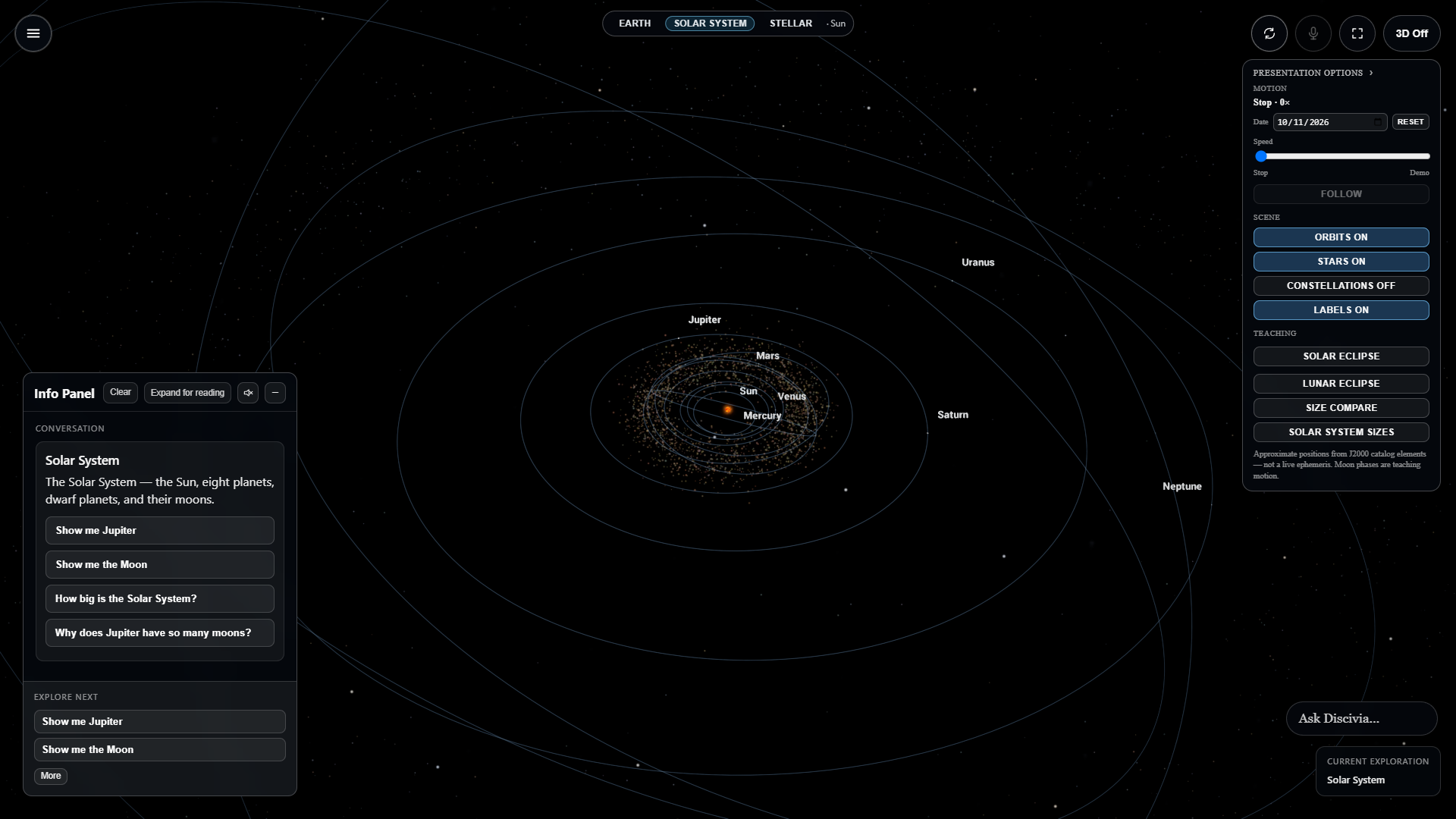
See planetary orbits together and explore how worlds relate to the Sun.
Authentic Discivia app capture · English interface.
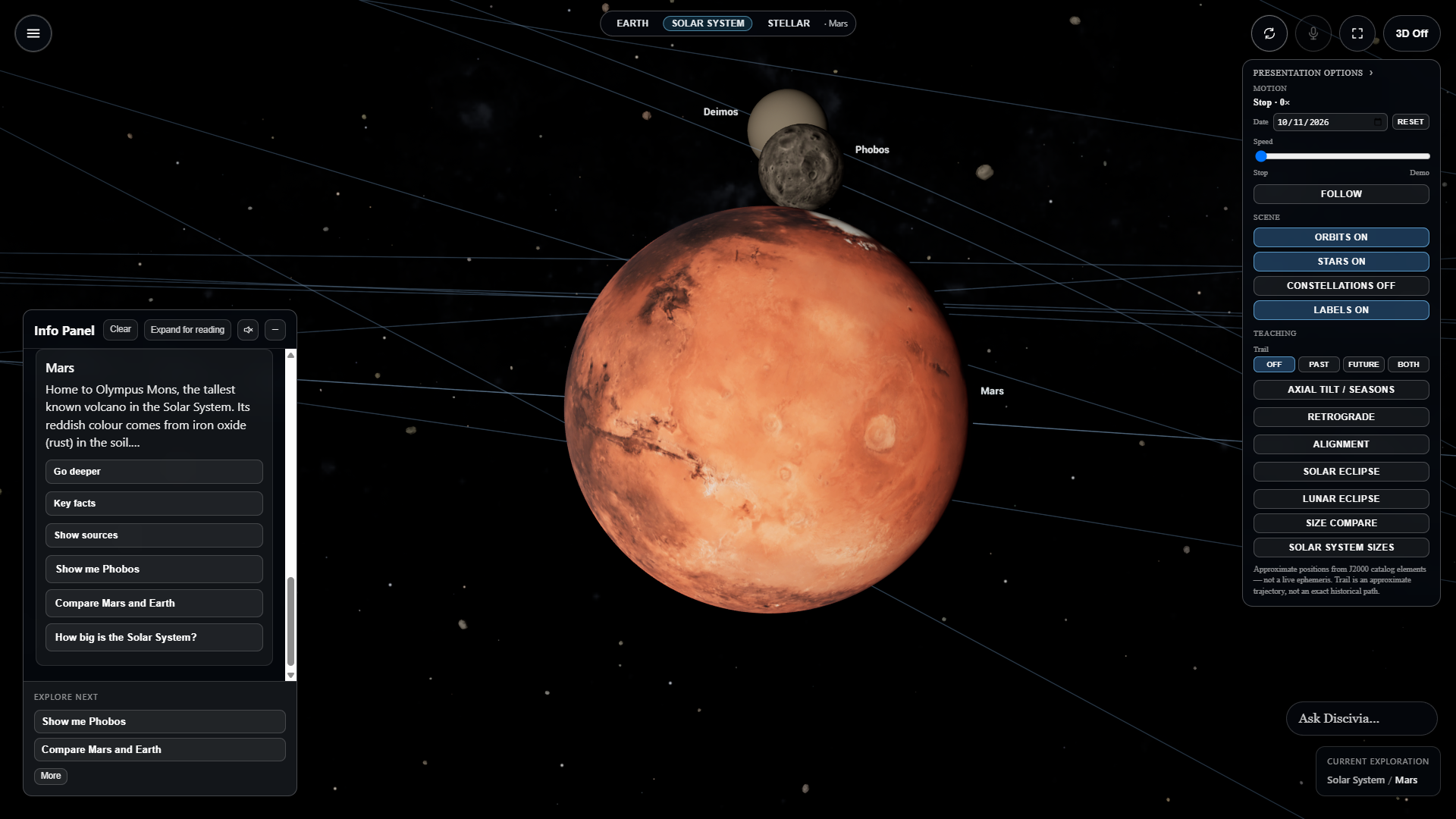
Inspect Mars with its information panel and controls for date, motion and orbital context.
Authentic Discivia app capture · English interface.
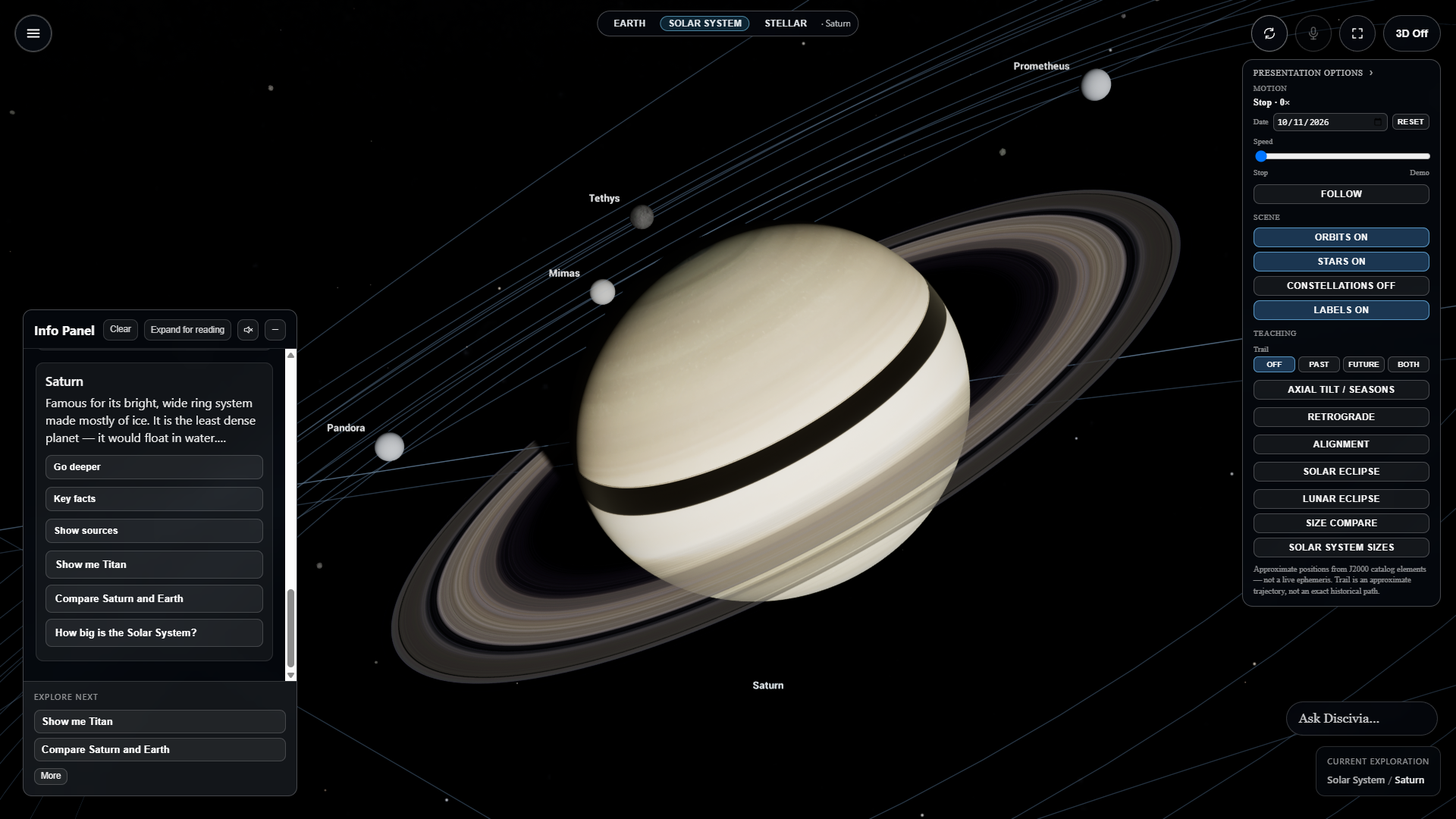
Take a closer look at Saturn and its rings in Discivia’s native renderer.
Authentic Discivia app capture · English interface.
NASA NSSDCA Planetary Fact Sheets provide physical properties, rotation periods and J2000 mean orbital elements for planets and Pluto.
JPL Solar System Dynamics supplies satellite parameters and selected orbital elements. Named small bodies use locally stored Small-Body Database data.
IAU rotational-element recommendations supply J2000 pole directions for the eight planets, grounding their axial orientation in a common reference.
Discivia computes both past and future positions from locally stored orbital elements with an approximate Keplerian model. Orbital shapes, inclinations and planetary axis directions use source data; sizes, distances and moon spacing use presentation scales. It does not query JPL Horizons or provide precision ephemerides or eclipse predictions.
Source links describe the references used by Discivia. Installed space data is read locally; these links are not required for offline exploration.
Curriculum
Use supported lessons on inner and outer planets, orbits and spacecraft evidence. Compare what an educational model shows with what an observation can establish.